

Last Updated: September 9, 2026
Platelet-Rich Plasma (PRP) and Bone Marrow Aspirate Concentrate (BMAC) are autologous orthobiologic treatments used in some orthopedic care plans for joint and soft-tissue conditions. PRP is prepared from a patient’s blood and contains concentrated platelets and signaling proteins. BMAC is prepared from a patient’s bone marrow and contains a mixture of cells and signaling factors. These treatments may be considered for selected patients with conditions such as osteoarthritis or certain tendon injuries after a careful orthopedic evaluation.
This guide explains how regenerative orthopedic medicine actually works and which conditions respond best. You’ll also see a comparison of PRP vs. BMAC stem cell therapy at LA Orthopedics, plus answers to common questions.
If chronic pain has been holding you back, book a regenerative orthopedic evaluation at LA Orthopedics and find out whether PRP or BMAC fits your injury.
Anatomy of the ACL and Mechanics of Knee Instability
The knee depends on four main ligaments for stability, and the anterior cruciate ligament is one of the most important for sports movement. Understanding its role helps explain why a tear causes so much instability.
Biomechanical Role of the Anterior Cruciate Ligament
The anterior cruciate ligament (ACL) connects the thighbone (femur) to the shinbone (tibia). Its main job is to prevent the tibia from sliding too far forward under the femur, called anterior translation. The ligament also resists the twisting forces that occur when the body changes direction rapidly.
When the ACL tears, the knee loses control. The tibia may slide out too far forward, and the joint may turn in ways it shouldn’t. This is why patients often describe the knee as loose or unpredictable, particularly on uneven ground.
Non-Contact Pivoting vs. Direct Contact ACL Tears
ACL injuries are often non-contact. A sudden stop, a hard plant-and-cut move, or an awkward landing can create enough force to tear the ligament. These contact-free injuries are common in basketball, soccer, and skiing.
Direct contact tears happen when an outside force, like a blow to the side of the knee, pushes the joint past its normal range. Contact injuries are more likely to also damage nearby ligaments.
Associated Injuries: Meniscal Tears and the O’Donoghue Triad
ACL tears can occur with other knee injuries, including meniscal tears, cartilage damage, or injury to additional ligaments.
The classic O’Donoghue, or “unhappy,” triad describes combined injury to the ACL, MCL, and medial meniscus. In real-world ACL injuries, however, associated meniscal and ligament damage can occur in several different patterns, which is why examination and imaging are important for treatment planning.
Recognizing ACL Tear Symptoms: When to Seek Orthopedic Care
Recognizing the signs of an ACL injury can help patients get an appropriate diagnosis and treatment plan sooner, particularly when instability or associated meniscal injury is present.
The Audible Pop and Immediate Joint Swelling
Many patients hear or feel a distinct pop when they get injured. Swelling inside the joint follows soon after, usually within 1 to 4 hours, because the torn ligament bleeds into the joint space. This kind of rapid, significant swelling is unusual for minor sprains, which is why it can signal something more serious.
Ice, elevation, and rest can help manage swelling early on, but the ligament damage still needs proper evaluation. Swelling alone should never be treated as the whole picture.
Instability, Buckling, and Giving-Way Sensations
When the initial swelling subsides, the knee may feel unstable with normal movement for many patients. It might feel like the joint is sliding or it might buckle when you step off a curb. A feeling of the knee giving way is one of the most common symptoms of an ACL injury, and it may persist even after pain and swelling improve.
Loss of Full Extension and Deep Joint Tenderness
In the days after the tear, many patients can’t fully straighten the knee. This can happen because of swelling, tight hamstring muscles, or a piece of torn meniscus blocking movement. Deep, diffuse joint tenderness is also common. These findings allow a clinician to differentiate an ACL tear from other knee injuries.
Diagnostic Workflow: How LA Orthopedics Evaluates ACL Tears
Physical examination and imaging revealing the damage confirm the diagnosis. LA Orthopedics uses both to get a full picture before recommending a treatment plan.
Clinical Exam Maneuvers: Lachman, Anterior Drawer & Pivot Shift Tests
The physical exam often used to diagnose an ACL tear is the Lachman test. The surgeon slightly leans forward and gently pulls the tibia forward, checking for additional movement compared with the healthy leg. The anterior drawer test assesses the same motion but in a different position, and the pivot shift test assesses rotational instability.
These maneuvers can often be performed during the initial orthopedic evaluation, although swelling, guarding, or pain may affect the examination soon after an injury.
MRI and Radiographs for ACL Evaluation
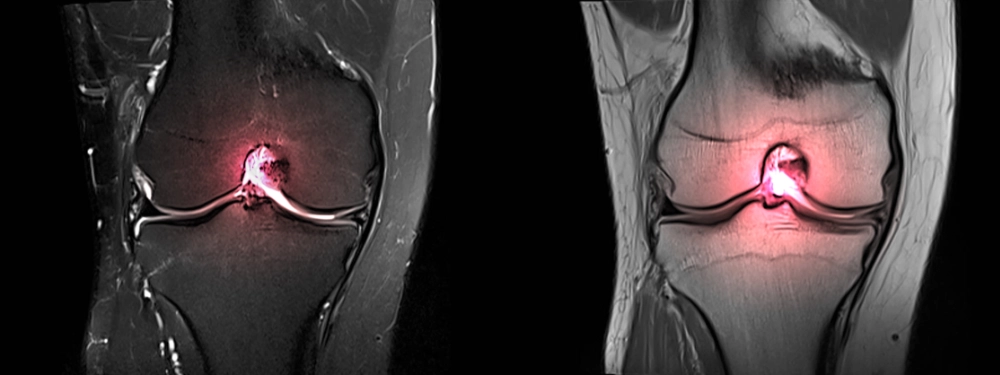
X-rays may be obtained to evaluate the bones, rule out certain associated injuries, and assess joint alignment or pre-existing degenerative changes. X-rays do not show the ACL directly. MRI can help characterize the ACL tear and identify associated meniscal, cartilage, or ligament injuries that may affect treatment planning.
MRI can help confirm or characterize an ACL tear and identify associated meniscal, cartilage, or ligament injuries that may affect treatment planning. It also shows related meniscus or cartilage injuries that an exam alone may miss. Together, exam findings and MRI results give the surgical team a full picture of the tear and any related damage, shaping graft choice and the surgical plan before the patient reaches the operating room.
Graft Selection Framework: Autograft vs. Allograft Comparison
One of the biggest decisions in ACL reconstruction is choosing the graft tissue that will replace the torn ligament. This choice affects healing time, long-term strength, and the chance of re-tear.
| Graft Type | Key Characteristics | Key Considerations | Primary Benefit | Recovery Consideration |
|---|---|---|---|---|
|
Bone-Patellar Tendon-Bone (BTB) Autograft |
Rigid fixation using bone blocks on each end | High-demand pivoting athletes | Rapid bone-to-bone healing | Possible anterior knee pain when kneeling |
|
Hamstring Tendon (Semitendinosus/Gracilis) Autograft |
Soft tissue graft through a small incision, high tensile strength | Patients wanting lower donor site discomfort | Flexible graft with less morbidity | Tendon thickness can vary; tendon-to-bone healing takes longer |
|
Quadriceps Tendon Autograft |
Thick graft with dense collagen structure | May be considered in primary or revision reconstruction, including in active patients | Predictable graft volume | Mild, temporary quad weakness |
|
Donor Allograft (Cadaver Tissue) |
No donor site harvest required | May be considered in selected patients when avoiding autograft harvest is a priority, generally used more cautiously in younger, high-demand athletes because of higher graft-failure risk | Faster initial post-op recovery | Higher graft-failure risk in younger, highly active patients |
Choosing between autograft and allograft for ACL reconstruction balances healing rate, long-term strength, and the demands of the patient’s sport. Autografts generally have lower graft-failure rates than allografts in younger and more active patients. Graft incorporation and remodeling vary by graft type, fixation, patient biology, rehabilitation, and other factors.
Patient-Specific Graft Matching Strategy
LA Orthopedics doesn’t rely on a single default graft for every patient. Instead, the surgical team weighs each person’s age, activity level, and long-term goals before recommending a graft type. Age plays a major role in this decision. Younger athletes returning to pivoting sports tend to do better with autograft tissue that has a lower re-tear rate. The demands of the sport matter too; a soccer player needs something different than someone returning to casual cycling.
Other factors include joint looseness, prior knee surgeries, and whether this is a first surgery or a repeat one. Quadriceps tendon autograft may be considered in primary or revision reconstruction, particularly when previous graft harvest, anatomy, graft size, or patient-specific factors influence the available options.
Schedule a consultation with LA Orthopedics to discuss which graft option best fits your case.
What to Expect During Arthroscopic ACL Reconstruction
Knowing what happens during surgery can ease some of the worry that comes before any procedure. Arthroscopic ACL reconstruction is done through small cuts using a camera and small tools, which limits tissue disruption compared to older open surgery.
Outpatient Surgery & Regional Nerve Blocks
The surgical technique and tunnel position are selected according to the patient’s anatomy, graft choice, and operative findings, with the goal of restoring functional knee stability.
Patients are watched briefly as the anesthesia wears off, then go home with crutches, a hinged brace, and clear instructions for the first few days. Having someone available to drive and help at home is recommended.
Arthroscopic Tunnel Creation & Anatomical Fixation
During surgery, the surgeon makes small cuts and inserts a camera to see inside the joint. In selected cases, limited notchplasty may be performed if anatomy creates graft impingement or another specific surgical reason exists.
The surgeon then drills tunnels into the femur and tibia that match the natural spot of the original ACL. The surgeon passes the graft through and secures it with screws or other fixation devices. This anatomical placement plays a big role in restoring normal knee movement.
ACL Reconstruction Recovery Timeline & Return-to-Sport Milestones
Recovery timeline expectations after ACL surgery vary by patient, but rehab plans often follow a similar path. This staged approach protects the healing graft while slowly rebuilding strength, motion, and confidence.
- Early phase: control swelling, restore extension, activate the quadriceps, and progress weight-bearing as directed.
- Intermediate phase: restore gait, range of motion, strength, and balance.
- Advanced strengthening: progress resistance, neuromuscular training, and sport-specific preparation when strength and movement criteria are met.
- Running and agility: introduced only after adequate healing and functional testing.
- Return to pivoting sport: often occurs around 9–12 months or later, but clearance should be based on healing, strength, hop testing, movement quality, psychological readiness, and surgeon/rehab assessment rather than time alone.
How fast a patient moves through these stages depends on the graft used, whether other structures like the meniscus were repaired, and how consistently the rehab program is followed. Your surgeon may clear you to return to sports after ACL reconstruction based on strength and stability test results, not simply on how many months have passed since surgery.
Why Choose LA Orthopedics for ACL Reconstruction
The surgeon performing the reconstruction influences the outcome as much as the graft type selected. Patients looking for an orthopedic knee specialist in Los Angeles should look for focused sports medicine training and a coordinated recovery plan.
Fellowship-Trained Sports Medicine Specialists
Dr. Shahab Mahboubian, a fellowship-trained orthopedic sports medicine surgeon, performs ACL reconstruction at LA Orthopedics and treats athletes ranging from weekend recreational players to competitive collegiate and professional athletes. This focused training means Dr. Mahboubian has handled a high volume of ACL cases and stays current with evolving graft research and surgical technique. That depth of experience matters most when surgeons discover other injuries, such as meniscal or cartilage damage, during surgery and need to address them in the same procedure.
Anatomic Double-Bundle & Single-Bundle Custom Reconstruction
LA Orthopedics places tunnels to match the ACL’s natural shape, using either a single-bundle or double-bundle technique. This precision helps restore normal knee movement and lowers the rotational looseness that can lead to graft failure over time.
Integrated Physical Therapy & Biomechanical Testing
Surgery is only part of a successful recovery. LA Orthopedics coordinates rehab with trusted physical therapy clinics across Los Angeles, so the surgical and rehab plans work together. Strength and hop testing are used before clearing patients to return to sport, removing guesswork about when an athlete is truly ready.
Frequently Asked Questions (FAQ)
How long does ACL reconstruction surgery take?
Outpatient arthroscopic ACL reconstruction typically takes 60 to 90 minutes. Including prep and anesthesia recovery, patients usually spend 3 to 4 hours at the facility before going home.
How long will I need crutches after ACL reconstruction surgery?
Many patients are on crutches for 1 to 3 weeks. Progress depends on the type of graft and whether a meniscal repair was performed at the same time, which may require protected weight bearing for 4 to 6 weeks.
What is the difference between an autograft and an allograft for ACL surgery?
An autograft uses tissue from the patient's own body, such as the patellar, hamstring, or quadriceps tendon. Autografts generally have lower graft-failure rates than allografts in younger and more active patients. An allograft uses donor tissue from a tissue bank and avoids the additional surgical site required to harvest an autograft.
When can I return to competitive sports after ACL surgery?
Return to competitive pivoting sports often occurs around 9–12 months or later. Clearance should be criteria-based and may include strength testing, hop testing, range of motion, knee stability, movement quality, psychological readiness, and comparison with the opposite limb. The surgeon and rehabilitation team consider the full picture rather than relying on time or one test alone.
Is ACL reconstruction surgery painful during recovery?
Pain is usually most noticeable early after surgery and tends to improve as recovery progresses. Management may include regional anesthesia when appropriate, prescribed or over-the-counter medication, icing, elevation, and other measures recommended by the surgical team. Pain intensity and duration vary among patients.
Can a torn ACL heal without surgery?
Some ACL tears can show healing with nonoperative treatment, but healing and functional stability are not predictable for every patient. Partial tears and selected complete tears may sometimes be managed with rehabilitation, particularly when the knee remains functionally stable, and the patient's activity demands are lower. Reconstruction is more often considered when significant instability persists, the patient wants to return to cutting or pivoting sports, or associated knee injuries influence the treatment decision.
What happens if I choose not to have ACL surgery?
Not every ACL tear requires reconstruction. Some patients can function well with rehabilitation, activity modification, and appropriate bracing, particularly when the knee remains stable during the activities that matter to them. However, an ACL-deficient knee that repeatedly gives way can place the meniscus and articular cartilage at additional risk. Surgery may be considered when instability persists, the patient wants to return to cutting or pivoting activities, or associated knee injuries make reconstruction more appropriate.
When can I drive after ACL reconstruction surgery at LA Orthopedics?
Return to driving depends on which knee was operated on, whether the patient is still using a brace or crutches, pain medication use, strength, and the ability to perform an emergency stop safely. Right-knee surgery generally requires a longer delay than left-knee surgery. Dr. Mahboubian should provide individualized clearance.
Schedule Your ACL Evaluation at LA Orthopedics
No two ACL tears play out exactly the same way, and no two knees recover on exactly the same timeline. The details in this guide, from graft selection to the return-to-sport timeline, are meant to help you ask better questions, not replace an actual exam. Your anatomy, your sport, and what the surgeon sees on imaging or during the procedure itself can shape the plan that’s right for you.
Timely evaluation can help clarify whether ongoing instability is placing the meniscus or cartilage at additional risk and whether rehabilitation, reconstruction, or another approach is appropriate.
CONTACT LA ORTHOPEDICS
LA Orthopedics
Website: https://laorthopedics.com/
Location: Los Angeles, California
This guide provides general medical information and is not formal medical advice. Individual diagnostic findings and recovery timelines vary. Consult a licensed orthopedic surgeon for an accurate diagnosis and personalized treatment plan.