
Last Updated: September 10, 2026
Platelet-Rich Plasma (PRP) and Bone Marrow Aspirate Concentrate (BMAC) are autologous orthobiologic treatments used in some orthopedic care plans for joint and soft-tissue conditions. PRP is prepared from a patient’s blood and contains concentrated platelets and signaling proteins. BMAC is prepared from a patient’s bone marrow and contains a mixture of cells and signaling factors. These treatments may be considered for selected patients with conditions such as osteoarthritis or certain tendon injuries after a careful orthopedic evaluation.
This guide explains how regenerative orthopedic medicine actually works and which conditions respond best. You’ll also see a comparison of PRP vs. BMAC stem cell therapy at LA Orthopedics, plus answers to common questions.
If chronic pain has been holding you back, book a regenerative orthopedic evaluation at LA Orthopedics and find out whether PRP or BMAC fits your injury.
The Science of Regenerative Orthopedics: How Biologics Work
The body already knows how to heal itself. But some tissues, like tendons and cartilage, have poor blood flow. This means the natural repair signals are often too weak to fix the damage. Orthobiologic treatments use components obtained from the patient's own blood or bone marrow and concentrate selected cells or signaling factors before they are placed at the treatment site. Researchers continue to study how these preparations influence inflammation, pain, and tissue repair, and their effects can vary depending on the condition and the biologic preparation used.
PRP and BMAC are both called autologous biologics. This means the treatment comes entirely from the patient’s own body. This is different from donor-based therapies, which carry a higher risk of immune reaction. Here is how each option works.
Platelet-Rich Plasma (PRP) Mechanism & Growth Factors
PRP begins with a simple blood draw, just like a routine lab test. Then the blood goes into a centrifuge, a machine that spins the sample at high speed. This isolates platelets from other blood cells and concentrates them far more than normal.
When activated, platelets release signaling proteins and growth factors, including PDGF and TGF-beta, that are involved in processes such as inflammation, angiogenesis, and collagen synthesis. These biological effects are one reason PRP continues to be studied and used for selected musculoskeletal conditions.
Bone Marrow Aspirate Concentrate (BMAC) & Mesenchymal Progenitor Cells
BMAC is prepared from bone marrow aspirate, commonly obtained from the iliac crest of the pelvis. Bone marrow contains a mixture of platelets, growth factors, cytokines, hematopoietic cells, and a relatively small population of mesenchymal stromal/progenitor cells. After the aspirate is concentrated, the resulting preparation may be injected into a selected treatment site.
BMAC is being studied for several orthopedic applications, including osteoarthritis and certain cartilage or soft-tissue problems. Proposed effects involve cellular signaling and modulation of the local biological environment, but evidence does not establish that BMAC injections reliably regrow cartilage or rebuild damaged orthopedic tissue.
Autologous Safety Profile & Compliance Standards
PRP and BMAC are used in orthopedic practice, but evidence varies by condition, preparation method, and patient population. Patients should understand that these treatments are not the same as FDA-approved stem cell products used for certain blood disorders, and regenerative medicine products have not received FDA approval for treating orthopedic conditions such as osteoarthritis or tendonitis. Your physician should explain why a particular orthobiologic is being considered, what evidence supports its use for your condition, and what alternatives are available.
Key safety facts to know:
- PRP and BMAC use only your own blood or bone marrow, with no donor tissue.
- Both treatments follow FDA rules for minimal tissue manipulation.
- Allergic reactions and disease transmission risks are often very low with autologous biologics.
- A licensed physician, not medspa staff, should perform the harvesting and injection.
Conditions Treated with PRP and Stem Cell Therapy
Orthobiologic injections aren't appropriate for every orthopedic problem, and the evidence supporting them varies by condition. Patient selection depends on the diagnosis, severity of tissue or joint damage, previous treatments, examination findings, imaging, and individual goals.
Knee, Hip & Shoulder Osteoarthritis
Osteoarthritis is when the cartilage that cushions a joint degenerates over time. This leads to pain, stiffness, and loss of range of motion. PRP has been studied as an injection option for osteoarthritis, particularly knee osteoarthritis, with some studies reporting improvements in pain and function in selected patients. BMAC is also being investigated for osteoarthritis, but evidence remains less established and varies considerably across studies and preparations. Neither treatment should be presented as proven to regrow cartilage or reverse osteoarthritis.
Chronic Tendinopathies (Rotator Cuff, Tennis Elbow, Achilles)
Tendons have limited blood supply, which is why injuries here often become chronic instead of healing on their own. Conditions treated include:
- Rotator cuff tendinopathy: Shoulder tendon irritation from overhead movement.
- Lateral epicondylitis: Also known as tennis elbow; outer elbow tendon pain from gripping/twisting.
- Achilles tendinopathy: Heel cord irritation from running or jumping.
- Patellar tendinitis and plantar fasciitis: Knee tendon pain from jumping, and sole-of-foot pain, often worst in the morning.
Chronic tendinopathy involves changes in tendon structure and loading tolerance rather than simply an acute inflammatory injury. PRP may be considered for certain persistent tendinopathies after conservative treatments have not provided sufficient improvement, although evidence varies by tendon and treatment protocol.
Partial Ligament Tears & Joint Instability
PRP or other orthobiologic injections may be considered in selected soft-tissue injuries, but their role depends heavily on the structure involved, severity of the tear, joint stability, symptoms, and available evidence. Complete ligament tears, significant instability, and some labral injuries may require a different treatment approach, including surgical evaluation.
Comparative Decision Framework: PRP vs. Stem Cell Therapy (BMAC)
Choosing between PRP and BMAC depends on injury severity, the tissue involved, and the patient’s health goals. The table below compares how PRP and BMAC differ in biological source, treatment time, and the joint conditions each one is built to treat.
| Clinical Parameter | PRP Therapy | Stem Cell Therapy (BMAC) |
|---|---|---|
| Biological Source | Autologous peripheral blood draw | Autologous bone marrow aspirate (iliac crest) |
| Primary Bioactive Components | Concentrated platelets and growth factors (PDGF, TGF-beta) | Mesenchymal progenitor cells, cytokines, and growth factors |
| Primary Mechanism | Concentrated platelet-derived signaling factors that may influence inflammation and tissue-healing processes | Mixture of marrow-derived cells and signaling factors being studied for potential effects on pain, inflammation, and tissue repair |
| Conditions in Which It May Be Considered | Certain tendinopathies and selected cases of osteoarthritis or other soft-tissue injury | Selected orthopedic conditions where the physician determines BMAC may be appropriate after discussing the available evidence and alternatives |
| Procedure Complexity | Simple 30-minute outpatient blood draw and injection | 60 to 90 minute outpatient procedure with local bone marrow harvest |
| Treatment Protocol | 1 to 3 targeted sessions spaced 2 weeks apart | Typically 1 comprehensive single-session harvest and injection |
PRP and BMAC differ in how they are obtained, what they contain, the complexity of the procedure, and the evidence available for different conditions. One is not simply a stronger version of the other. Dr. Mahboubian considers the diagnosis, treatment history, imaging findings, available evidence, and patient goals before discussing whether either option belongs in the treatment plan.
Book an evaluation at LA Orthopedics to get a straight answer on whether PRP, BMAC, or another approach fits your joint or tendon injury.
What to Expect During Biological Treatment at LA Orthopedics
Both PRP and BMAC are outpatient procedures done in a clinical setting, not an operating room. Patients arrive, complete the harvesting step, wait while the sample is processed, and get the injection during the same visit.
Autologous Harvesting & Precision Centrifugation
For PRP, the process starts with a same-day blood draw, much like a routine lab visit. For BMAC, doctors harvest bone marrow using local anesthesia to keep the patient comfortable. They collect the sample from the iliac crest.
Once collected, both sample types undergo sterile centrifugation. This step separates and concentrates the helpful components while removing material the injection does not need.
Image-Guided Injection (Ultrasound & Fluoroscopy Navigation)
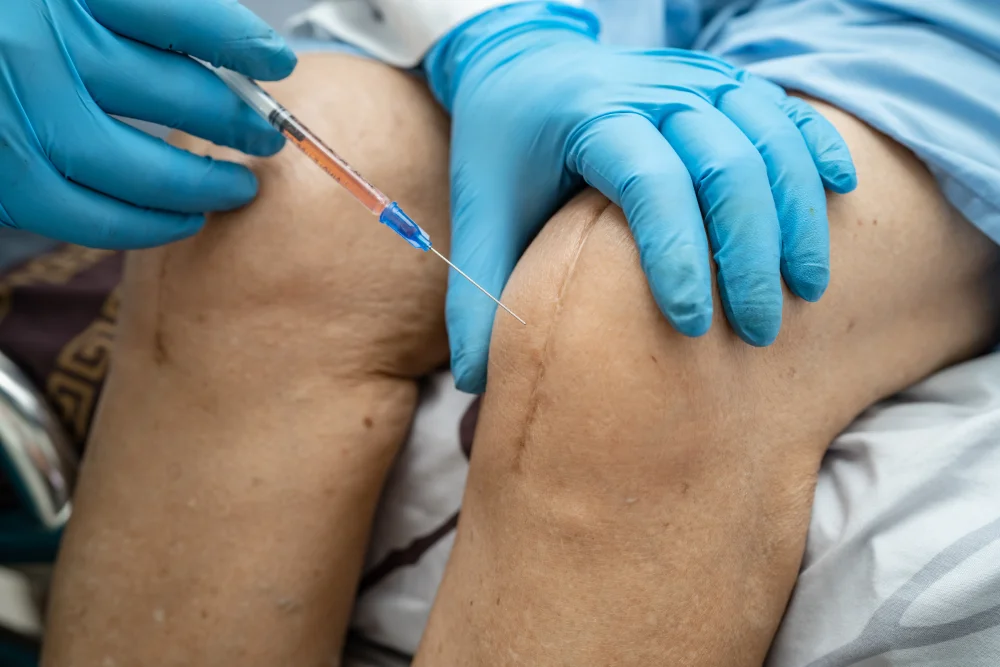
After processing, the physician uses ultrasound or fluoroscopic imaging to guide needle placement at the intended treatment site. Image guidance can improve anatomical accuracy for certain injections. This matters most in tight spaces, like the shoulder joint or a partially torn tendon. Image-guided injections are often more accurate than injections done without imaging. This lowers the chance that the injection misses the damaged tissue.
What Recovery Looks Like
Recovery varies according to the treatment site, diagnosis, procedure, and individual patient. Temporary soreness or swelling can occur after an orthobiologic injection. Your physician will provide instructions about activity, medication use, and when to begin or resume rehabilitation.
Unlike an anesthetic injection intended primarily for immediate symptom relief, improvement after PRP or BMAC may be gradual when it occurs. Follow-up visits help the physician evaluate symptoms and function and determine when activity can safely progress. There is no universal recovery timeline, and results cannot be guaranteed.
Why Choose LA Orthopedics for Regenerative Medicine
Not every clinic that offers PRP or stem cell injections has the same level of medical training or equipment. This matters because injection success depends on accuracy and sample quality.
Fellowship-Trained Orthopedic Sports Medicine Physicians
Every regenerative treatment at LA Orthopedics is led by Dr. Shahab Mahboubian, a board-certified, fellowship-trained sports medicine physician. This matters because the procedure needs a precise diagnosis, the right dose, and careful image-guided delivery. Dr. Mahboubian also manages the full care plan from start to finish, including imaging and physical therapy, not just the injection visit.
Careful Preparation and Image-Guided Treatment
PRP and BMAC preparations can vary depending on the collection and processing method used. LA Orthopedics prepares each autologous sample according to its clinical protocol and uses image guidance when appropriate to help place the injection at the intended treatment site.
Integrated Physical Therapy & Biomechanical Optimization
Regenerative injections often work best with a structured rehab plan. Stronger muscles around the joint help support the tissue as it heals. LA Orthopedics works with physical therapy clinics across Los Angeles to build a plan that fits each patient’s injury and goals.
What every patient gets at LA Orthopedics:
- Board-certified, fellowship-trained sports medicine physicians perform every procedure.
- Medical-grade centrifugation equipment ensures a consistent, concentrated sample.
- Ultrasound and fluoroscopic guidance are used for every injection.
- Physical therapy coordination is built into the treatment plan.
Frequently Asked Questions (FAQ)
What is the main difference between PRP and Stem Cell Therapy?
PRP uses concentrated platelets and growth factors from a blood draw. It stimulates local tissue repair and reduces inflammation. Stem cell therapy, or BMAC, uses progenitor cells taken from bone marrow. It provides a broader regenerative signal for more advanced cartilage or joint damage.
Is PRP or Stem Cell Therapy covered by health insurance?
Health insurance plans often treat PRP and stem cell therapy as elective or experimental care. This means patients usually pay out of pocket. LA Orthopedics offers clear PRP injection cost pricing in Los Angeles and flexible consultation options.
What are the risks of PRP and BMAC injections?
Because PRP and BMAC are prepared from the patient's own blood or bone marrow, they avoid some of the immune and disease-transmission concerns associated with donor-derived materials. However, they are not risk-free. Potential risks can include pain, bleeding, infection, temporary swelling or soreness, and complications related to the harvest or injection site. Your physician should review procedure-specific risks before treatment.
How long does a PRP or Stem Cell injection procedure take?
A PRP procedure takes about 30 to 45 minutes from blood draw to final injection. A BMAC stem cell procedure takes about 60 to 90 minutes, including the bone marrow harvest under local anesthesia.
Why should I avoid anti-inflammatory drugs (NSAIDs) before and after PRP?
Some clinicians recommend limiting NSAIDs around PRP treatment because these medications affect inflammatory and platelet-related pathways. Recommendations vary by procedure, medical history, and prescribing clinician. Do not stop a prescribed medication without discussing it with the physician who manages it.
How many PRP injections will I need for chronic tendonitis or arthritis?
The number of treatments varies by diagnosis, treatment protocol, and response. Some PRP protocols use a single injection, while others may involve a series. BMAC is often performed as a single harvest-and-injection procedure, but the treatment plan should be individualized rather than based on a universal number of injections.
When can I return to sports or exercise after regenerative injection therapy?
Return to exercise depends on the tissue treated, diagnosis, symptoms, and procedure. Patients may be able to resume light daily activity relatively quickly, while higher-impact exercise or sports may need to be restricted longer. Follow the physician's and physical therapist's individualized progression rather than a fixed timeline.
How long do the results of PRP and Stem Cell Therapy last?
The duration of improvement varies considerably by diagnosis, severity, treatment used, and individual response. Some patients report sustained improvement, while others experience limited or temporary benefit. Neither PRP nor BMAC can guarantee a particular duration of pain relief.
Is BMAC the Same as Stem Cell Therapy?
BMAC is sometimes described as “stem cell therapy” because bone marrow contains a small population of mesenchymal stromal/progenitor cells. However, BMAC is a mixed bone-marrow concentrate, not a purified stem cell product. Patients considering treatments marketed as stem cell therapy should ask exactly what material is being used, where it comes from, how it is processed, and what evidence supports its use for their orthopedic condition.
Schedule Your Regenerative Consultation at LA Orthopedics
PRP and BMAC work differently depending on the joint, the injury, and how far the damage has progressed. What worked for another patient’s rotator cuff or knee may not fit yours, which is why imaging and a physical exam matter more than general information like this. Dr. Shahab Mahboubian reviews each case individually before recommending PRP, BMAC, or a combination of the two.
If you have been managing joint pain through rest, medication, or modified activity without real progress, a regenerative evaluation can tell you whether biologic injections are a realistic option before you consider surgery. Request an appointment with Dr. Shahab Mahboubian at LA Orthopedics to review your imaging and discuss the treatment that best matches your diagnosis.
CONTACT LA ORTHOPEDICS
LA Orthopedics
Website: https://laorthopedics.com/
Location: Los Angeles, California
This guide provides general medical information and is not formal medical advice. Individual diagnostic findings and recovery timelines vary. Consult a licensed orthopedic surgeon or sports medicine specialist for an accurate diagnosis and personalized treatment plan.